For years, sellers have had the advantage in the housing market. With limited homes available and high demand from buyers, it was tough for many to even get an offer accepted. But now, inventory is increasing, and the landscape is beginning to change in several areas.
So, is the market starting to balance out? And does this mean it will be easier for buyers? Here’s what you should know.
What Makes It a Buyer’s Market or a Seller’s Market?
It all comes down to the supply of homes in an area versus the demand from buyers. This balance ultimately determines who has the upper hand.
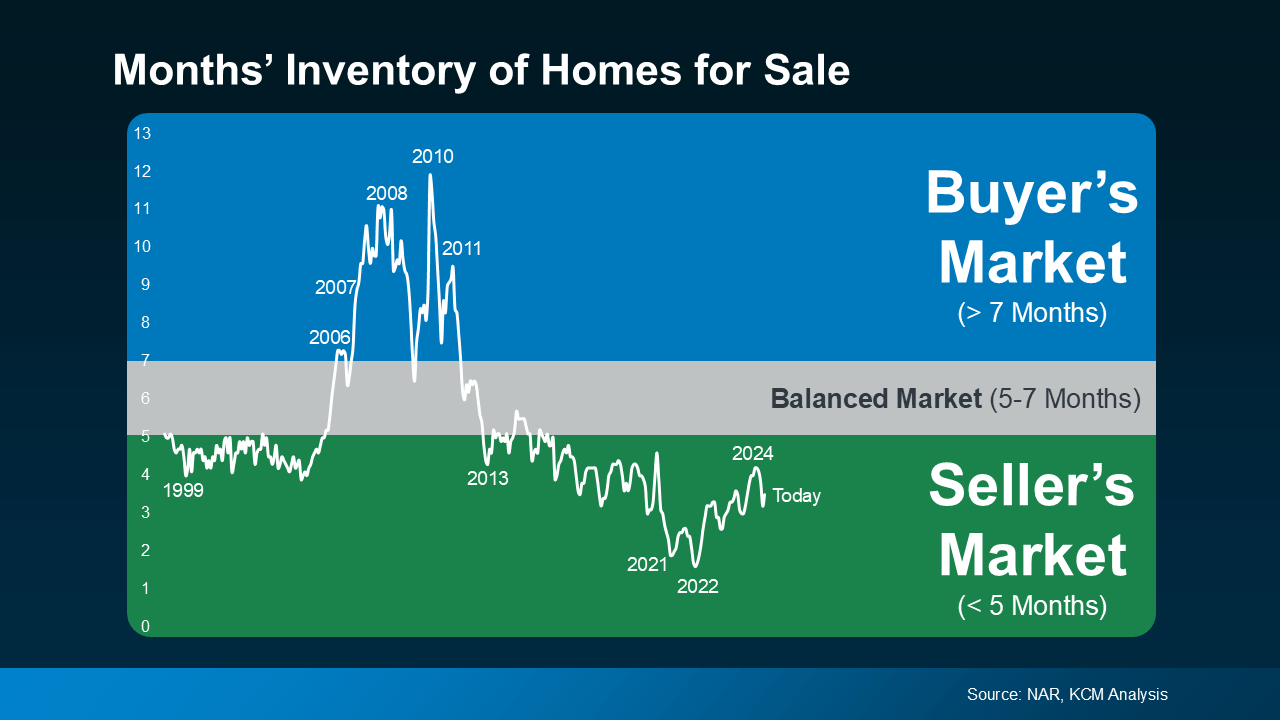
In a Seller’s Market, there are more buyers than available homes, giving sellers the advantage. As a result, prices rise, multiple offers flood in, and homes sell quickly—often above the asking price—due to the limited inventory.
In contrast, a Buyer’s Market occurs when there are more homes than buyers. In this scenario, the power shifts to the buyers. Sellers may need to offer incentives, make concessions, or be more flexible in negotiations to close a deal, as buyers have more options and can take their time deciding.
You can observe this trend over time with data from the National Association of Realtors (NAR) in the graph below:
Where the Market Stands Now
Although it’s still a seller’s market in many areas, buyers in certain locations now have more leverage than they’ve had in years. This shift is largely due to the recent growth in inventory. As Lance Lambert, Co-Founder of ResiClub, puts it:
“Among the nation’s 200 largest metro area housing markets, 41 markets ended January 2025 with more active homes for sale than they had in pre-pandemic January 2019. These are the places where homebuyers will be able to find the most leverage or market balance in 2025.”
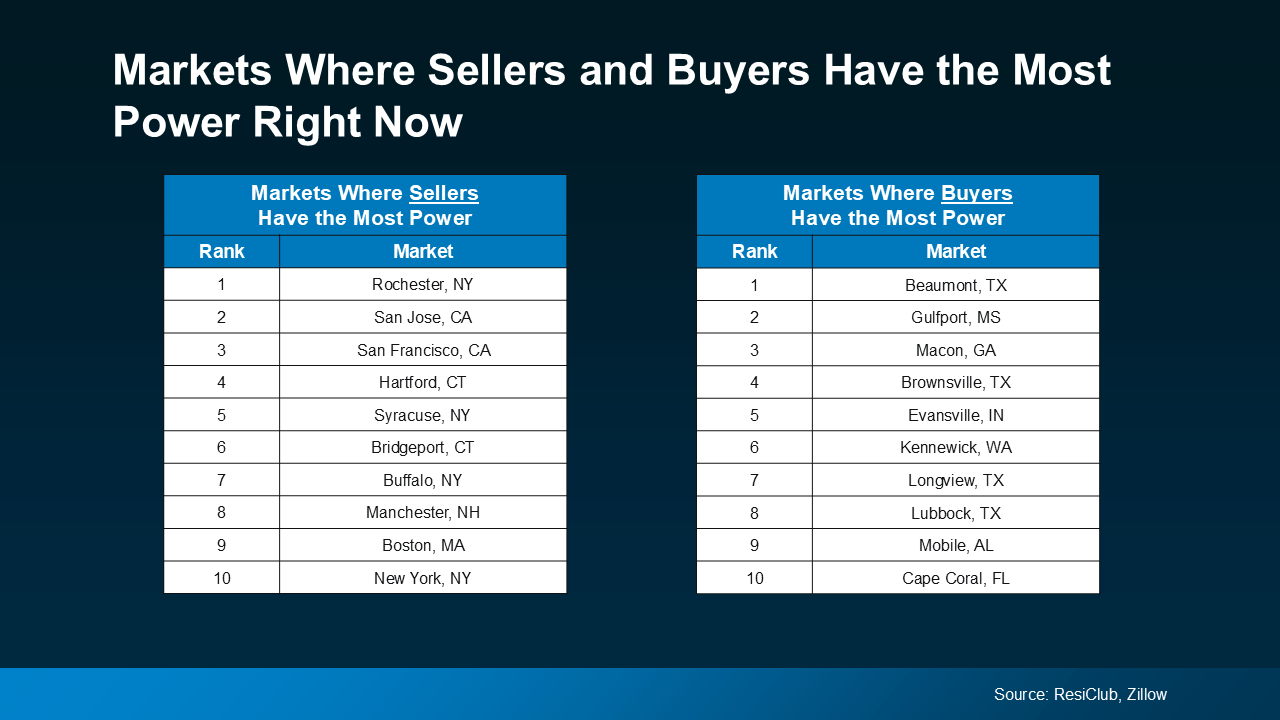
Here’s a look at some of the top seller’s and buyer’s markets right now, based on that research: